

Alright, let's be real. Mars is having a freakin' identity crisis. One minute it's a barren wasteland, the next it's got underground water and maybe, just maybe, a hint of freakin' life. NASA finds a shiny rock and suddenly it's a cosmic visitor center? Give me a break.
Rock Stars and Red Herrings
So, Perseverance finds this rock, "Phippsaksla," which sounds like something out of a bad sci-fi movie. Iron and nickel, the same stuff that falls on Earth. NASA's all excited because it might be a meteorite. Well, duh. Space is full of rocks. Is this really front-page news? It's like finding a pebble on a beach and declaring it a major geological discovery. But hold on, what if this rock is not just a rock? What if it's a sign? A sign that Mars is not just a dead rock, but a planet with history, a planet that has been visited by other space rocks over millions of years?
And then there's the water thing. Underground water in Gale Crater, thanks to NYU Abu Dhabi. So, Mars "didn't simply go from wet to dry"? According to Dimitra Atri. Well, no planet does. Everything is more complicated than that.
Terraforming Dreams and Bureaucratic Nightmares
But here's where it gets interesting – and where my blood pressure starts to rise. All this talk about habitability, about water, about potential life... it all leads to one thing: terraforming. The idea of turning Mars into another Earth. Sounds great, right? Except... have we done such a bang-up job with THIS Earth that we need another one to screw up?
And who's gonna pay for this pipe dream? NASA? Please. Remember the Mars Sample Return mission? The one that was supposed to bring back those precious Martian rocks? Yeah, that's "financially unstable" now, according to the Trump administration. Surprise, surprise. Bill Nelson, former NASA administrator, decided to “pull the plug on this, and we’re going to start over”. Start over? That's government speak for "we have no freakin' clue what we're doing." According to some reports, NASA’s Mars Sample Return Mission in Jeopardy as U.S. Considers Abandoning Retrieval.
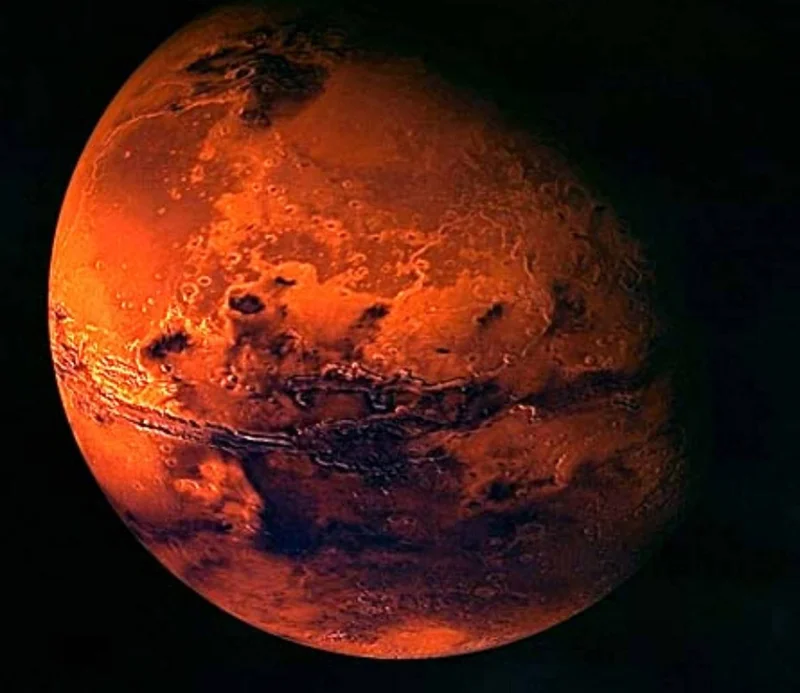
Meanwhile, China's planning to snag some Martian samples by 2031. Offcourse, they are. We're too busy fighting over budgets and commercial proposals from Musk and Bezos to actually, you know, do science.
Microbes: The Unsung Heroes?
And what about the little guys? The extremophiles, the bacteria and archaea that can survive in the harshest conditions? Scientists are all hot and bothered about Deinococcus radiodurans, the radiation-resistant bacteria that could theoretically help terraform Mars. But let's be real: are we seriously pinning our hopes on a bunch of microbes? It's like expecting ants to build a skyscraper.
The article mentions "mosses and biocrusts" as "promising candidates for early-stage ecological engineering on Mars". Ecological engineering? On Mars? Are we really talking about turning Mars into a giant terrarium?
I mean, sure, it's cool that these little buggers can survive in Mars-like conditions. It’s even cooler that some can fix nitrogen under very low atmospheric availability. But is it enough? Can these microscopic creatures actually transform an entire planet? It seems… highly unlikely. The role of extremophile microbiomes in terraforming Mars is an interesting topic, but it is still highly theoretical.
Then again, maybe I'm just being cynical. Maybe there's a chance, a tiny sliver of hope, that Mars could become something more than a red, dusty rock. But until I see a freakin' Starbucks on Olympus Mons, I'm not holding my breath.